
The Core Blueprint: Boosting Cashflow distinguishes tradies who are always chasing payments from those managing steady, reliable, and profitable businesses.
You didn’t start your trade business to stress about money, juggle bills, or wait weeks to get paid.
However, for many tradies, that becomes the norm.
The jobs are getting done. The team is working hard. Yet cash still feels tight, and there’s always pressure around what’s coming in next.
That’s where the Core Blueprint: Increasing Cashflow changes everything.
Because increasing cashflow isn’t about doing more work—it’s about building systems that keep money moving consistently.
Explore more insights and practical strategies on cashflow, invoicing, and financial control —visit Resvita and start building a trade business with consistent, predictable income. 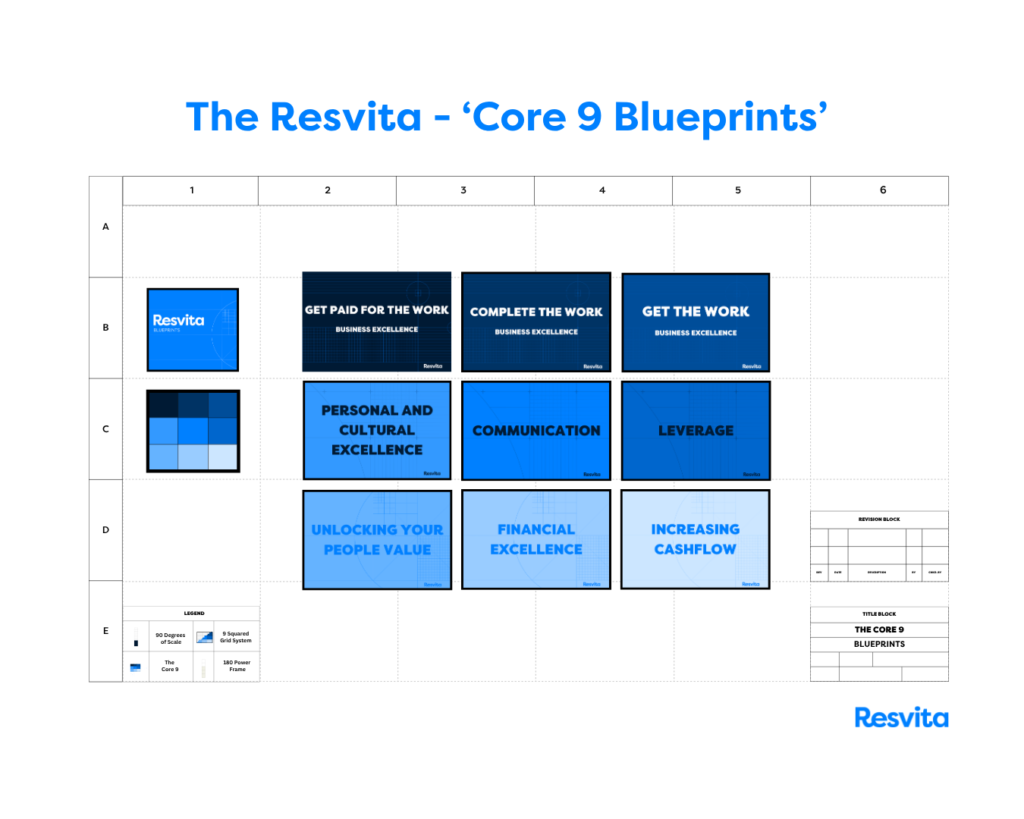
Why Cashflow Is Everything in a Trade Business
Most tradies focus on revenue.
However, cashflow is what actually keeps your business alive.
When cashflow isn’t strong, you’ll notice:
- Delays paying suppliers or your crew
- Stress around covering daily expenses
- Limited ability to invest in growth
- A constant cycle of chasing payments
As a result, even profitable businesses can struggle.
In other words, it’s not just about how much you earn—it’s about when you get paid.
What “Increasing Cashflow” Actually Means
The Core Blueprint: Increasing Cashflow is about creating consistent, predictable money movement in your business.
More specifically, it focuses on:
- Getting paid faster
- Managing incoming and outgoing cash
- Forecasting future cashflow
- Reducing financial pressure
Instead of reacting to cash shortages, you stay in control.
The Resvita Approach to Increasing Cashflow
At Resvita, cashflow isn’t left to chance.
Through frameworks like the Big 12 Pillars , Core 9 Blueprints , and 180 Powerframe, tradies build financial systems that support consistent growth.
This approach helps you:
- Improve payment timing and consistency
- Reduce financial stress
- Plan ahead with confidence
- Build a stronger, more resilient business
As a result, your business becomes more predictable and scalable.
Explore Stop Chasing Invoices and Get Paid Faster in Your Trade Business and learn how to tighten your payment systems, reduce delays, and keep cash flowing consistently.
The Core Systems That Increase Cashflow
Here’s how Increase Cashflow in your trade business works in practice.
1. Forecast and Plan Your Cashflow
First, you need visibility.
Without it, you’re constantly guessing.
With structured forecasting, you:
- Track cash coming in and going out
- Identify future gaps
- Plan ahead for slow periods
Because of this, you stay ahead of problems instead of reacting to them.
2. Use Milestone-Based Invoicing
Next, waiting until the end of a job to get paid creates pressure.
That’s why milestone-based invoicing is critical.
With this system, you:
- Break jobs into payment stages
- Get paid throughout the project
- Maintain steady cashflow
As a result, money keeps moving instead of getting stuck.
3. Improve Communication Around Payments
At the same time, unclear communication leads to delays.
Clients need clarity.
With better systems, you:
- Set clear payment terms upfront
- Communicate expectations early
- Reduce disputes and confusion
Consequently, payments come in faster.
Want support from other tradies? Join our Community—connect with business owners working to improve cashflow, reduce financial pressure, and create more predictable income.
4. Streamline Your Invoicing and Follow-Ups
One of the biggest cashflow issues is slow invoicing.
If invoices go out late, payments come in late.
With structured systems, you:
- Send invoices immediately
- Use automated reminders
- Follow up consistently
Because of this, you reduce delays without constantly chasing. 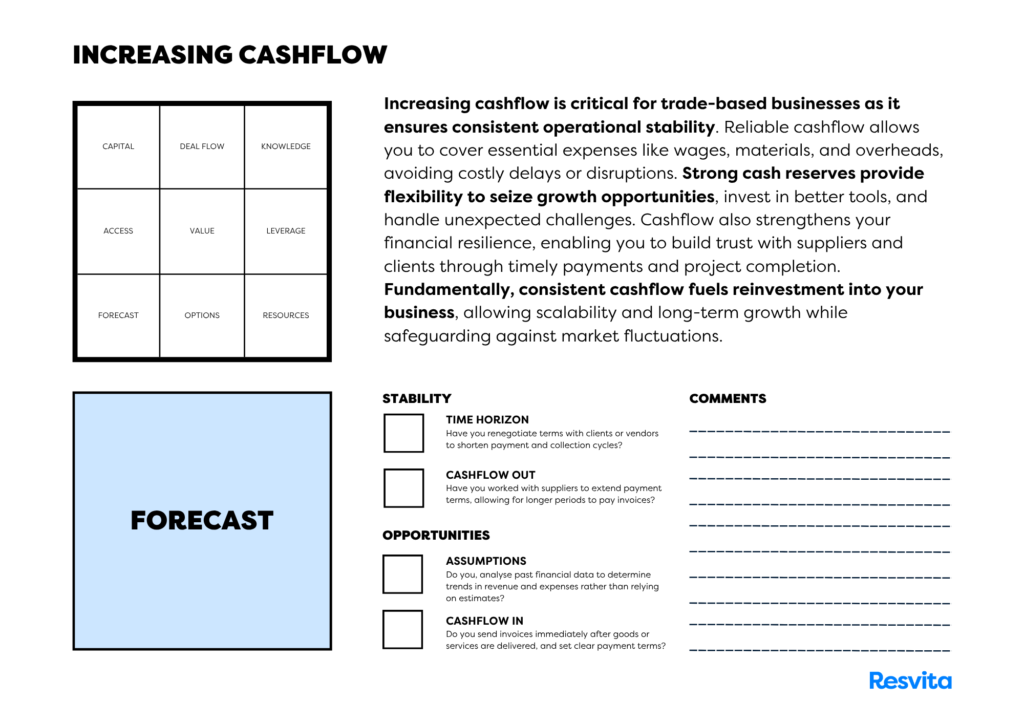
5. Maximise the Use of Your Resources
Cashflow isn’t just about income—it’s also about efficiency.
With the Core Blueprint, you:
- Use tools and equipment effectively
- Reduce unnecessary spending
- Improve operational efficiency
As a result, you increase profitability and cash availability.
6. Build Financial Resilience
Finally, unexpected costs are part of the game.
Without preparation, they hit hard.
With structured planning, you:
- Build a financial buffer
- Prepare for slow periods
- Reduce risk
Because of this, your business becomes more stable.
Need practical tools? Dive into our Resources —guides, templates, and checklists to help you streamline invoicing, improve payment timing, and stay in control of your cashflow.
The Benefits of Increasing Cashflow the Resvita Way
When your cashflow improves, everything changes.
Less Financial Stress
You’re not constantly worrying about money.
Better Business Stability
Your business becomes predictable and controlled.
Faster Growth Opportunities
You can invest in tools, people, and expansion.
Stronger Client Relationships
Clear systems build trust and professionalism.
Higher Profit Potential
Better cashflow leads to better decision-making.
Looking for hands-on learning? Check out our Events—workshops, webinars, and live sessions focused on improving cashflow, invoicing systems, and financial control.
What This Looks Like in the Real World
Picture a tradie business without cashflow systems.
Payments are delayed. Bills pile up. Stress builds.
Now compare that to a business running Core Blueprint: Increasing Cashflow.
- Payments come in consistently
- Cashflow is forecasted and planned
- Financial pressure is reduced
- Growth becomes possible
Because of this, the business becomes more stable—and far more profitable.
What You Can Do This Week
You don’t need to overhaul everything to improve your cashflow.
Instead, start with these steps:
- Review your payment terms
- Make them clear and structured
- Break jobs into milestones
- Get paid along the way
- Send invoices faster
- Don’t delay
- Set up reminders
- Automate follow-ups
- Track your cashflow weekly
- Stay in control
Small changes here create massive financial impact.
Who This Is For
If you’re operating as a sole trader, managing a sole trading business under government regulations, expanding your trade business with the help of a tradie coach, or looking for trade business mentoring, these cash flow strategies are applicable.
We offer trade business coaching and business coaching specifically for tradesmen. This includes practical coaching tailored to match real job situations and schedules.
Please note: This guidance specifically covers business and trade activities. It does not include information about stock trading businesses, share trading operations, or forming a non-trading company.
Even if you’re a limited cost trader, you can adapt these steps to strengthen cash control while staying compliant.
Interested in exploring further? Explore our Programmes —designed to help youincrease cashflow, get paid faster, and build a trade business with consistent, predictable income.
Final Word: Cashflow Is Control
Getting more work is important.
However, increasing cashflow is what keeps your business running.
With the Core Blueprint: Increasing Cashflow, you build systems that give you control, stability, and confidence in your finances.
That’s how you move from chasing money… to running a trade business that works for you. 
Ready to increase cashflow and take control of your trade business?
Discover further insights and practical strategies by visiting our website, Resvita, and continue to strengthen and organize your trade business.
If improving your cashflow resonates with you, join our Community to access practical strategies, real conversations, and the support you need to build a stable and financially controlled trade business.
Take control of your cashflow today and start building systems that keep money moving, reduce stress, and give you confidence in your business.
Cashflow Clarity for Tradies: Your Questions Answered
Question: What’s the difference between revenue and cashflow, and why does cashflow matter for tradies?
Short answer: Revenue is how much you bill; cashflow is when money actually hits (and leaves) your bank account. In trade businesses, timing is everything.
Weak cash flow manifests as delayed payments to suppliers or your team, daily expense pressure, restricted growth potential, and the ongoing hassle of chasing invoices.
Even if a business is making money, it can face challenges if cash isn’t on hand when necessary. It’s cash flow, not just revenue, that keeps your business running.
Question: What does the Core Blueprint: Increasing Cashflow actually involve?
Short answer: It’s about building systems that keep money moving predictably, not doing more work.
The plan concentrates on receiving payments more quickly, managing cash flow in and out, predicting future cash requirements, and easing financial stress. This helps you move from just reacting to cash shortages to being in control.
Question: What core systems increase cashflow in practice?
Short answer: Six practical levers work together:
- Forecast and plan your cashflow to see what’s coming in and going out, spot gaps, and prepare for slow periods.
- Use milestone-based invoicing so you’re paid in stages throughout a job, not just at the end.
- Improve communication around payments with clear terms upfront and early expectations to reduce disputes.
- Streamline invoicing and follow-ups by sending invoices immediately, automating reminders, and following up consistently.
- Maximise resources by using tools efficiently, cutting unnecessary spend, and improving operations.
- Build financial resilience with buffers and plans for slow periods and surprises.
Question: What quick actions can I take this week to start improving cashflow?
Short answer:
- Review and clarify your payment terms.
- Break current jobs into milestones and invoice per stage.
- Send any outstanding invoices now—don’t delay.
- Set up automated reminders and a consistent follow-up routine.
- Track cashflow weekly to stay ahead of issues.
Question: How does Resvita help tradies make cashflow more predictable?
Short answer: Resvita employs structured approaches like the Big 12 Pillars, Core 9 Blueprints, and 180 Powerframe to organize cash flow. This enhances the timing and consistency of payments, reduces stress, and allows for confident planning and scalable growth.