Most trade business owners think growth requires more people.
More jobs come in, workloads increase, and the natural reaction is to hire.
At first, that seems logical.
Many businesses find that hiring more people doesn’t always fix their issues.
In fact, without the right systems, hiring often amplifies them.
More team members can create problems. They lead to more communication issues. Mistakes happen more often. Management feels more pressure. Operations become more complex.
That’s why one of the most important lessons for any growing trade business is simple:
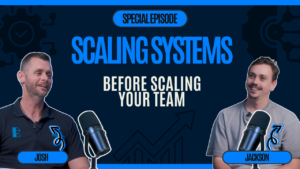
Scale your systems before you scale your team.
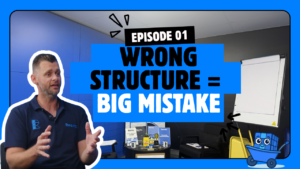
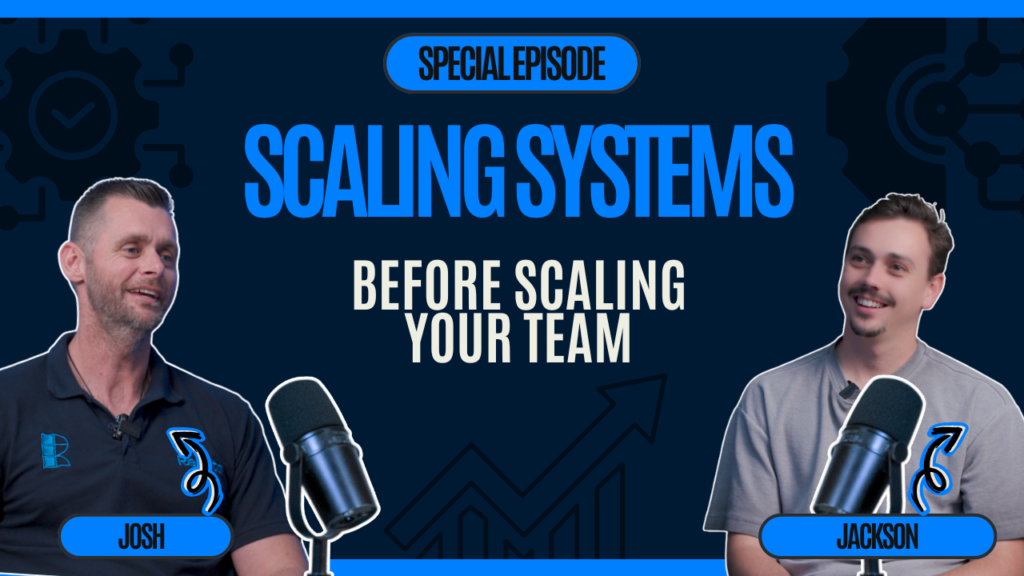
In this podcast episode, we talk about strong operational systems. They help build a solid foundation for growth. We also give advice to trade business owners. They should avoid hiring too soon.
If you’d like to explore this topic in more detail, listen to the full podcast episode where we discuss why you’re busy but broke. Meanwhile, you can listen to more episodes here.. Listen to more episodes here
Why More People Don’t Always Solve Growth Problems
When a trade business is small, the owner often manages everything.
Instructions are given verbally. Processes live in someone’s head. Decisions happen quickly because there are fewer moving parts.
Initially, this works.
However, as the business grows, cracks begin to appear.
More jobs create:
- More communication requirements
- More scheduling complexity
- More quality control challenges
- More opportunities for mistakes
Without systems, every new hire adds pressure rather than reducing it.
So, business owners often end up managing more people and feeling busier than ever.
This is where many businesses hit a growth ceiling.
The Real Problem: Scaling Chaos
One of the biggest insights from the episode is that many businesses don’t have a people problem.
They have a systems problem.
Hiring into a disorganised business rarely creates efficiency.
Instead, it creates confusion.
Without documented processes, team members are forced to:
- Ask constant questions
- Rely on the owner for decisions
- Create their own ways of doing things
- Learn through trial and error
As a result, inconsistency spreads across the business.
Meanwhile, the owner becomes the bottleneck.
The Shift: Build Infrastructure Before Expansion
A key takeaway from the episode is that successful growth requires operational infrastructure.
Rather than asking:
“Who do I need to hire next?”
Trade business owners should first ask:
“What systems need to exist before I hire?”
This shift changes everything.
Instead of scaling people first, businesses scale:
- Processes
- Communication
- Accountability
- Workflows
- Leadership systems
Consequently, every future hire becomes more productive and easier to onboard.
Discover our services, resources, and latest updates. Visit our website to learn more and find the information you need.
What Systems Should Be Built First?
Not every system needs to be complex.
However, several core systems create the strongest foundation for growth.
1. Operational Workflows
Every recurring task should have a documented process.
This helps create consistency across projects and reduces reliance on memory.
As a result, team members can perform more confidently and independently.
2. Communication Systems
Strong communication systems ensure information flows effectively throughout the business.
This includes:
- Project updates
- Team communication
- Client communication
- Reporting processes
Consequently, fewer mistakes occur and accountability improves.
3. Leadership Systems
As teams grow, leadership becomes increasingly important.
Clear responsibilities, expectations, and accountability frameworks help prevent confusion and improve performance.
Most importantly, leadership systems reduce dependency on the owner.
The Benefits of Scaling Systems First
Trade business owners who prioritise systems before hiring often experience significant advantages.
Better Team Performance
Firstly, new team members become productive faster because expectations and processes are clear.
Improved Profitability
Secondly, fewer mistakes and less rework improve efficiency and protect margins.
Easier Growth
Additionally, operational systems allow businesses to handle more work without creating chaos.
Reduced Owner Dependency
Most importantly, the business becomes less reliant on one person making every decision.
This creates a more scalable and valuable business.
Stay informed with expert insights, industry trends, and practical tips. Explore our latest blog articles and expand your knowledge.
Signs Your Systems Need Attention
Many trade business owners don’t realise their systems are limiting growth.
Common warning signs include:
- Constant interruptions from the team
- Repeated mistakes
- Inconsistent project delivery
- Difficulty onboarding new hires
- Feeling like everything depends on you
If these challenges sound familiar, your systems may need to improve. Strengthening them will help before you grow your team.
What Trade Business Owners Can Do Next
Building systems doesn’t require a complete business overhaul.
Instead, focus on incremental improvements.
Start by:
Documenting repeatable processes Capture the steps for recurring tasks.
Creating communication standards Define how information should flow through the business.
Clarifying responsibilities Ensure everyone understands their role.
Building accountability systems Track outcomes rather than relying on memory.
Over time, these improvements create significant operational leverage.
Final Thoughts
Many trade business owners believe hiring is the answer to growth.
However, growth without systems often creates more pressure, not less.
The strongest businesses don’t scale by adding people first.
They scale by building systems that support people.
Scale your systems first. This is key for any trade business owner’s growth. It helps you grow effectively.
If this topic caught your interest, listen to the full podcast episode. It goes deeper into the systems and structures for sustainable business growth. You’ll learn about the operations needed to succeed.
Because scalable businesses aren’t built on effort alone.
They rely on systems that help people perform well as the business grows.
Connect with industry professionals, gain valuable insights, and stay up to date with the latest developments. Register for our upcoming events today.
Q&A
Q: Why should trade business owners build systems before hiring? A: Strong systems create consistency, accountability, and efficiency. New team members can work well without depending too much on the business owner.
Q: What happens when businesses hire without systems? A: Hiring without systems can lead to confusion, communication issues, and uneven performance. It also puts more pressure on the owner.
Q: What are business systems in a trade business? A: Business systems are simple processes and workflows. They include communication structures and accountability frameworks. These help the business run well and stay consistent.
Q: Why do trade businesses hit a growth ceiling? A: Many businesses reach a point where informal processes no longer support growth. Consequently, operational complexity increases while efficiency decreases.
Q: How do systems improve team performance? A: Systems provide clarity around expectations, responsibilities, and processes. Therefore, team members can work more confidently and independently.
Q: What systems should be prioritised first? A: Strong growth needs good workflows. It also needs clear communication, effective leaders, and strong accountability.
Q: How do systems improve profitability? Strong systems cut mistakes, boost efficiency, reduce rework, and ensure consistent project delivery. As a result, profit margins often improve.
Q: What are signs a business lacks systems? A: Common signs include repeated mistakes. Team confusion is also a sign. Poor communication and onboarding issues are key too. Too much owner involvement in daily tasks can be a problem.
Q: How do systems support scalability? A: Systems create consistency across people and projects. Consequently, businesses can handle more work without increasing operational chaos.
Q: What is the long-term benefit of scaling systems before scaling your team? Strong systems boost profits, team performance, and efficiency. They also add business value. Over time, this makes the company more scalable and sustainable.