Finding good people is becoming a major challenge for growing trade businesses.
You’ve got projects booked, customers waiting, and opportunities to expand. However, finding skilled tradespeople who genuinely want to join your business isn’t always easy.
Recruitment ads can be expensive, and candidates don’t always show up for interviews. On top of that, hiring the wrong person can cost your business valuable time, money, and productivity.
So, how can you attract great talent without starting the recruitment process from scratch every time?
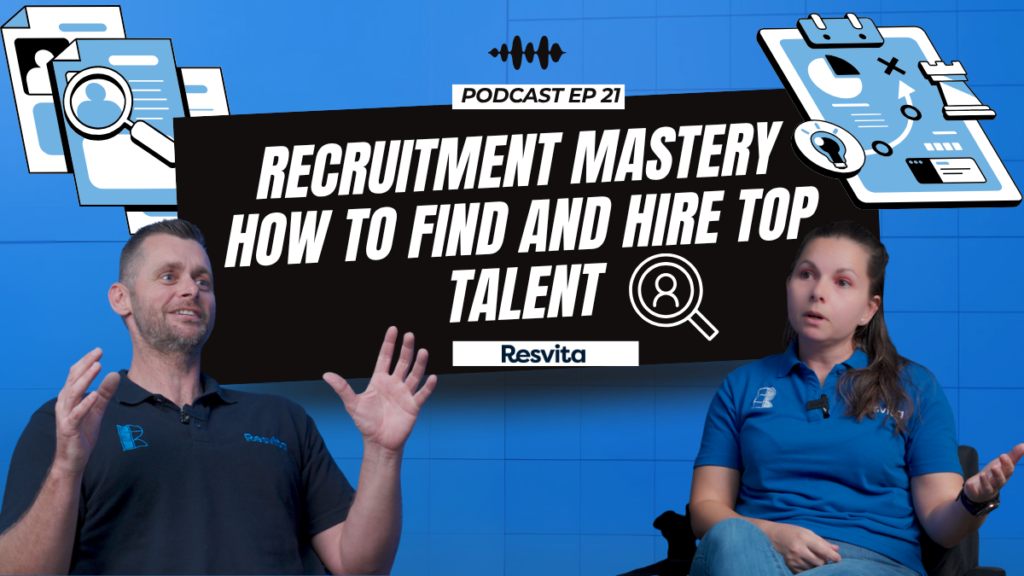
In this episode of the Handle It Podcast, the Resvita team explores recruitment strategies for trade businesses. Drawing on practical insights from 365, the team explains how to attract, hire, and retain the right people as your business grows.
If you’d like to explore this topic further, listen to the full Handle It Podcast episode, Recruitment Mastery: How to Find and Hire Top Talent. Discover how the right recruitment strategies can help you attract skilled tradespeople, build a stronger team, and improve employee retention as your trade business grows. Meanwhile, explore more Handle It Podcast episodes and practical business resources at Resvita.
The key takeaway?
Successful recruitment isn’t just about finding someone when you’re desperate. Instead, it’s about building a reliable system that consistently attracts the right people.
Why Traditional Recruitment Is Getting More Expensive
Many trade business owners rely on platforms such as SEEK and Indeed to find new employees. Although these platforms can generate applications, recruitment costs can quickly add up.
First, you pay for job ads and spend time reviewing resumes. Next, you organise interviews and assess candidates. Unfortunately, you might discover that the person you’ve interviewed isn’t the right fit.
As a result, recruitment becomes an expensive, reactive process that takes your attention away from running the business.
However, there’s another way to approach hiring.
Rather than relying on a single platform, build several recruitment channels and maintain relationships with potential candidates. This approach creates a stronger talent pipeline, making it easier to find suitable people when new opportunities arise.
Just as you track sales leads and follow up with potential customers, your business also needs reliable systems for managing people and opportunities. Learn how scaling systems before scaling your team can help you build a stronger foundation for sustainable growth.
Treat Recruitment Like Lead Generation
One of the biggest insights from the episode is surprisingly simple: recruitment should work like your sales pipeline.
When a potential customer enquires about your services, you collect their details, track the opportunity, and follow up. In the same way, you can build relationships with potential employees instead of contacting them only when a position becomes available.
Within 365, applicants from platforms such as SEEK and Indeed are added to a central candidate database. This allows the business to keep track of contact details, resumes, and relevant experience.
For example, candidates can be organised by:
- Trade qualification or skill set
- Location
- Previous experience
- Availability
- Potential future roles
When the business needs a carpenter, painter, or labourer, the team can search its database and contact suitable candidates directly. Consequently, there’s less need to pay for another job ad every time a new position opens.
Over time, this database becomes a valuable recruitment resource that supports business growth.
Remember: Always handle candidate information responsibly and follow applicable privacy requirements and contact permissions.
Build Multiple Recruitment Channels
Relying on one recruitment platform limits your options. Instead, diversifying your recruitment channels gives you more opportunities to connect with skilled tradespeople.
The episode highlights several ways to attract potential team members, including:
- SEEK and Indeed job advertisements
- Trade-specific contractor platforms
- Labour hire providers
- Facebook trade communities
- Existing candidate databases
- Referrals from your current team
By combining these channels, you can reach candidates who might not be actively searching on traditional job boards.
Recruitment is just one part of building a successful trade business. For more practical advice on improving your operations, explore Resvita’s business growth resources, designed to help tradies strengthen their systems and grow with confidence.
Why Team Referrals Work
Your existing employees understand your business culture, expectations, and working environment. Therefore, they’re often well-positioned to recommend people who could be a good fit.
Introducing a recruitment incentive programme can encourage your team to refer suitable candidates. In addition to reducing reliance on paid advertising, referrals can help you connect with people who already have a trusted relationship with someone in your business.
However, it’s still important to assess every candidate fairly and consistently. A referral should open the door, not replace the recruitment process.
Hire for Culture, Not Just Technical Skills
Technical ability is important, but it doesn’t guarantee that someone will become a valuable long-term team member.
Equally important is understanding what candidates want from their next workplace.
For example, some tradespeople prioritise higher wages, while others value supportive relationships, development opportunities, and a team they enjoy working with.
The podcast explains how 365 builds these connections through monthly trade meetings, social activities, and quarterly summits. These initiatives help the business demonstrate what makes its working environment different.
As a result, recruitment becomes about more than competing on wages alone. It also becomes an opportunity to attract people who share your expectations and want to grow alongside your team.
When candidates understand your culture from the beginning, they’re better equipped to decide whether your business is the right fit for them.
Create a Structured Interview Process
A consistent interview process makes recruitment more efficient and helps you compare candidates fairly.
During the episode, the team discusses the Topgrading method by Brad Smart as a foundation for structured interviews. Within 365, the recruitment process generally involves three stages.
1. Review the Application
Start by checking whether the candidate meets the essential requirements for the role.
Consider their qualifications, previous experience, location, and other relevant criteria. This initial review helps you identify suitable applicants before investing more time in the process.
2. Conduct a Short Phone Interview
Next, arrange a brief phone conversation lasting around five to ten minutes.
Use this discussion to clarify the candidate’s availability, expectations, experience, and suitability for the position. Importantly, this early screening stage can prevent unnecessary interviews when the role and candidate aren’t aligned.
3. Complete a Detailed Interview
Candidates who progress through the initial stages can then participate in a more detailed interview, either face-to-face or online.
This conversation provides an opportunity to explore technical experience, cultural alignment, career goals, and long-term expectations. You can also explain the role and give candidates a clearer picture of what working in your business involves.
Just as importantly, act quickly. Skilled tradespeople may have several employment opportunities available, so unnecessary delays can mean missing out on strong candidates.
Recruitment Doesn’t End When Someone Accepts
Hiring the right person is only half the challenge. Retaining them matters just as much.
According to the episode, 365 uses structured onboarding and regular follow-up conversations to help new employees settle into the business.
The onboarding process includes:
- Introducing job management and communication systems
- Explaining essential processes and workplace expectations
- Checking in after the first day
- Reviewing progress after the first week
- Following up after the first month
- Conducting further reviews throughout the probation period
These steps help new team members understand their responsibilities and become comfortable with the way the business operates.
Furthermore, regular check-ins give managers an opportunity to identify challenges before they become bigger problems. They also allow employees to share feedback, discuss development opportunities, and raise concerns.
Consequently, onboarding becomes more than a simple introduction. Instead, it forms an important part of your long-term employee retention strategy.
The Benefits of Recruitment Mastery
When recruitment becomes a structured business process, several benefits become possible.
Lower recruitment costs: By reconnecting with previous applicants and exploring multiple recruitment channels, you may reduce your reliance on repeated paid advertising.
Better hiring decisions: Consistent screening and structured interviews help you identify suitable candidates earlier.
Stronger business culture: Recruiting people whose expectations align with your workplace can support better teamwork and communication.
Improved employee retention: A well-planned onboarding process and regular feedback help new employees feel supported.
Greater capacity for growth: With a stronger talent pipeline, your business is better prepared to take on future projects without scrambling to find workers at the last minute.
Ultimately, these improvements help trade business owners build stronger teams while reducing the pressure of reactive recruitment.
Here’s What You Can Do This Week
You don’t need to overhaul your entire recruitment process overnight. Instead, start with these five practical actions.
1. Create a Candidate Database
Organise previous applicants by trade, location, experience, and availability. Make sure you manage their personal information responsibly and follow applicable privacy requirements.
2. Review Your Recruitment Channels
Identify additional platforms, industry networks, and trade communities where you could connect with suitable candidates. By expanding your reach, you’ll have more options when a position becomes available.
3. Introduce a Referral Incentive
Encourage your existing employees to recommend skilled people who may suit your business. If appropriate, consider offering a referral incentive to recognise successful recommendations.
4. Standardise Your Interviews
Develop a consistent set of screening questions covering technical skills, experience, availability, and workplace expectations. This will help you assess candidates more efficiently and fairly.
5. Build an Onboarding Checklist
Plan the steps every new employee should complete, including introductions, system training, and follow-up conversations. For example, schedule check-ins for day one, week one, and month one.
By taking these steps, you can begin creating a more organised and predictable recruitment system without adding unnecessary complexity to your day-to-day operations.
Final Thoughts
Many trade business owners treat recruitment as something they need to address only when an employee leaves or workloads increase. However, successful businesses take a more proactive approach.
They build relationships with potential candidates, maintain organised talent pipelines, develop strong workplace cultures, and invest in structured onboarding.
That’s why recruitment mastery is essential for trade businesses looking to grow sustainably. Rather than scrambling to fill vacancies, you can develop systems that help you attract and retain the right people over time.
Want to learn more about finding and hiring top talent?
Listen to the full episode of the Handle It Podcast, “Recruitment Mastery: How to Find and Hire Top Talent.”
You can also visit Resvita for free resources, tools, templates, and business blueprints to help you improve your operations.
Because building a scalable trade business isn’t just about winning more work. Ultimately, it’s about having the right people and systems in place to deliver it.
Q&A: Recruitment Mastery for Trade Businesses
Why is recruitment becoming more difficult for trade businesses?
Trade businesses face competition for skilled workers, while recruitment advertising and candidate screening can be expensive. Consequently, having a structured recruitment system helps businesses find suitable candidates more consistently.
What is recruitment mastery for trade businesses?
Recruitment mastery means building repeatable systems to attract, assess, hire, and retain skilled tradespeople. Instead of recruiting only when a vacancy appears, businesses maintain relationships with potential candidates and develop an ongoing talent pipeline.
How can trade business owners reduce recruitment costs?
Business owners can reduce their reliance on paid advertising by maintaining a candidate database, using multiple recruitment channels, and encouraging employee referrals. As a result, they may be able to reconnect with suitable candidates without starting every search from scratch.
Why should recruitment be treated like lead generation?
Both recruitment and lead generation involve finding potential prospects, collecting relevant information, assessing suitability, and maintaining relationships. Therefore, applying similar processes to recruitment helps businesses organise candidates and follow up when opportunities arise.
What recruitment platforms should trade businesses use?
The podcast discusses SEEK, Indeed, contractor platforms, labour hire providers, and community networks. However, rather than relying on a single source, trade businesses can benefit from combining several channels to reach a wider range of candidates.
Why is company culture important when hiring tradespeople?
A strong workplace culture can attract candidates who value teamwork, communication, and long-term development. Furthermore, discussing workplace expectations during recruitment helps both parties determine whether the role is a suitable match.
What is the best interview process for trade businesses?
A structured process typically involves three stages: reviewing applications, conducting short phone interviews, and holding detailed interviews with suitable candidates. This approach helps businesses assess applicants consistently while avoiding unnecessary delays.
Why is speed important during recruitment?
Skilled candidates may receive multiple employment opportunities within a short period. Therefore, responding promptly and keeping interviews organised can help businesses avoid losing suitable applicants to competing employers.
How does onboarding improve employee retention?
Structured onboarding helps new employees understand their responsibilities, workplace systems, and expectations. Additionally, regular check-ins provide opportunities to resolve concerns early, improve communication, and support a smoother transition into the team.
What is the long-term benefit of recruitment mastery?
Recruitment mastery helps trade businesses build stronger talent pipelines, improve hiring decisions, and support employee retention. Over time, these systems can reduce recruitment inefficiencies and make it easier to scale operations sustainably.
If you’d like to explore this topic further, listen to the full Handle It Podcast episode, Recruitment Mastery: How to Find and Hire Top Talent. Discover how better recruitment strategies can help you attract skilled tradespeople, improve employee retention, and build a stronger team. Meanwhile, explore more Handle It Podcast episodes and practical business resources at Resvita.