Most trade business owners believe growth comes from working harder.
More jobs. Longer hours. More pressure.
Eventually, though, effort alone stops producing results. That’s the point where many businesses hit a growth ceiling.
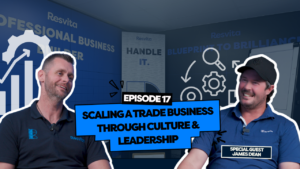
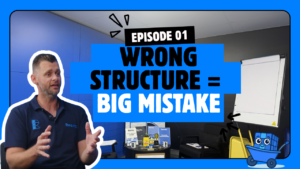
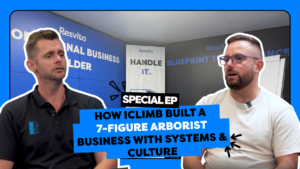
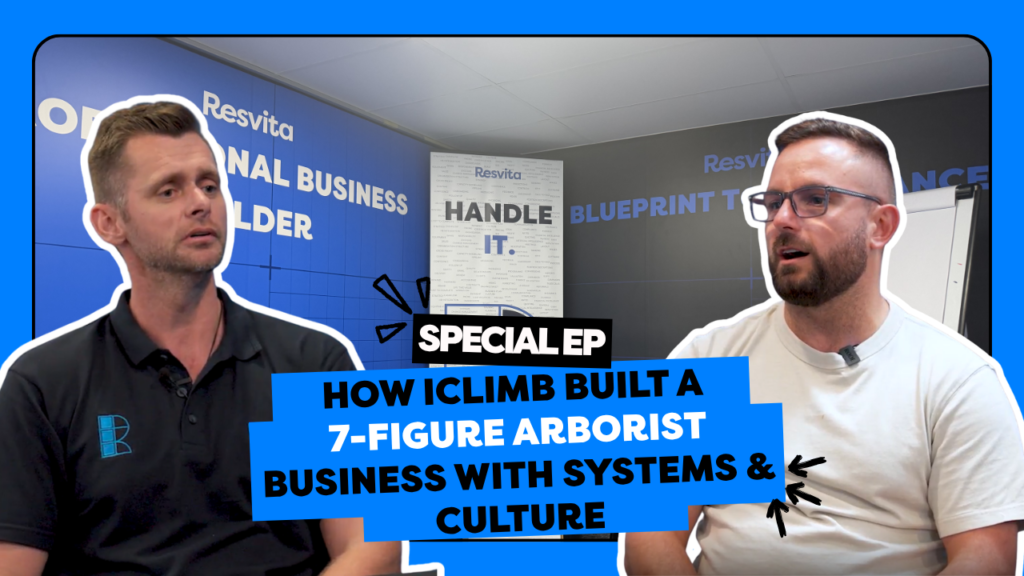
In this podcast episode, we explore how iClimb built a 7-figure arborist business by focusing on something many trade businesses overlook: systems and culture.
After all, sustainable growth doesn’t happen by accident. Instead, it happens when operational structure, leadership, accountability, and team culture work together.
As a result, this episode offers practical insights for trade business owners who want to move beyond survival mode and build a scalable business that performs consistently over time.
If you’d like to explore this topic in more detail, listen to the full podcast episode where we discuss why you’re busy but broke. Meanwhile, you can listen to more episodes here.. Listen to more episodes here
Why Most Trade Businesses Struggle to Scale
In the early stages of business, growth often feels straightforward.
The owner works harder, wins more jobs, and hires more people. At first, this creates momentum and progress.
However, as the business grows, complexity increases rapidly.
More projects usually create:
- More communication challenges
- More scheduling pressure
- More operational bottlenecks
- More responsibility for the owner
Without proper systems, growth starts creating stress instead of leverage.
Consequently, many trade business owners become trapped in daily operations and lose the ability to lead strategically.
This is exactly where iClimb took a different approach.
The Real Difference: Systems Before Scale
One of the biggest insights from the episode is simple:
Successful scaling requires structure before expansion.
Rather than relying purely on hard work, iClimb built systems that created consistency across the business.
These included:
- Operational workflows
- Team accountability
- Communication systems
- Leadership processes
- Performance expectations
Because of this, the business became less dependent on individuals and more reliant on repeatable processes.
That distinction matters.
Businesses that rely entirely on people often become unstable as they grow. In contrast, businesses built on systems become scalable and sustainable.
Why Culture Became a Competitive Advantage
Many trade business owners view culture as something secondary. However, this episode highlights how culture directly impacts operational performance.
At iClimb, culture wasn’t treated as motivation or team bonding alone. Instead, it became part of the operational foundation of the business.
This included creating:
- Clear standards
- Shared accountability
- Team alignment
- Strong communication
- Leadership expectations
As a result, the team operated with greater consistency and ownership.
More importantly, culture reduced the need for constant supervision from the business owner, which created greater stability across the business.
The Shift From Operator to Business Leader
Another major theme throughout the episode is leadership evolution.
Many trade business owners become the hardest-working person in the company. Ironically, that can limit growth.
To scale a 7-figure arborist business, the role of the owner had to evolve from operator to leader.
That shift looked like this:
- Doing everything → Building systems
- Solving every issue → Creating accountability
- Managing tasks → Leading performance
- Individual effort → Organisational structure
Once this transition happened, the business was able to grow without creating operational chaos.
That’s where real leverage begins.
Join Our Events & Programmes
Looking to take the next step in your business growth?
Resvita also offers events, programmes, and practical business support designed specifically for trade and service-based businesses. Whether you want to improve leadership, strengthen culture, or scale operations more effectively, our programmes are built to help you implement real change.
Learn more about upcoming events and programmes:
Explore Resvita Programmes & Events
What Systems Actually Helped iClimb Scale
The systems discussed in the episode weren’t overly complicated.
In fact, their strength came from clarity and consistency.
1. Operational Systems
Clear workflows reduced confusion across projects.
Consequently, jobs moved more efficiently while communication improved throughout the team.
2. Leadership Systems
Defined responsibilities created accountability.
As a result, team members took greater ownership and made decisions without constantly relying on the owner.
3. Cultural Standards
Strong expectations around communication, professionalism, and performance created consistency across the business.
Because everyone understood the standards, team alignment improved significantly.
The Benefits of Combining Systems and Culture
Some businesses focus only on systems.
Others focus only on people.
However, this episode demonstrates why both are necessary for long-term growth.
When systems and culture work together, trade businesses gain:
Improved Operational Performance
Workflows become more efficient, repeatable, and reliable.
Stronger Team Accountability
Team members operate with greater ownership and clarity.
Less Dependence on the Owner
The business no longer relies on one person to solve every problem.
Scalable Growth
Growth becomes more sustainable without creating additional operational pressure.
Ultimately, this is how trade businesses move from reactive operations to structured performance.
Explore More Resources
Browse more episodes and business insights here:
Signs Your Business Needs Better Systems and Culture
Many trade business owners don’t realise they’ve outgrown their systems until pressure starts building.
Common warning signs include:
- Constant operational firefighting
- Team inconsistency
- Communication breakdowns
- Lack of accountability
- Difficulty scaling without stress
If these issues sound familiar, your business likely needs stronger operational infrastructure.
What Trade Business Owners Can Do Next
Building a scalable business doesn’t happen overnight.
However, consistent improvements in systems and leadership can create massive long-term results.
Here are a few practical starting points:
Document Key Workflows
Create repeatable operational systems that reduce confusion and inconsistency.
Clarify Leadership Responsibilities
Ensure accountability exists throughout the entire team.
Build Performance Standards
Create clear expectations around communication, professionalism, and execution.
Focus on Culture Intentionally
Strong culture doesn’t happen accidentally. It’s built through leadership, systems, and consistency.
Over time, these improvements create greater stability, scalability, and long-term growth potential.
Final Thoughts
The success of iClimb wasn’t built on hustle alone.
Instead, it was built on systems, culture, leadership, and operational structure.
That’s an important lesson for every growing trade business.
Because scaling isn’t about pushing harder forever. It’s about creating a business that runs smoothly, even when the owner isn’t involved in every detail.
This episode provides a practical look at how structure, accountability, and strong operations helped iClimb build a 7-figure arborist business successfully.
If this topic resonates with you, listen to the full podcast episode to explore the systems and leadership strategies in greater depth.
After all, long-term growth doesn’t come from chaos.
It comes from building a business designed to scale.
Q&A
Why are systems important for scaling a trade business?
Strong systems create consistency, improve accountability, and reduce operational bottlenecks. As a result, trade businesses can grow sustainably without relying entirely on the owner to manage every detail.
What helped iClimb build a 7-figure arborist business?
iClimb focused on operational systems, leadership structure, team accountability, and business culture. Because of this, the business was able to scale while maintaining performance and stability.
Why do trade businesses struggle to scale effectively?
As businesses grow, complexity naturally increases. More projects, team members, and operational demands create pressure that informal systems can no longer support effectively.
What are operational systems in a trade business?
Operational systems are structured processes that manage workflows, communication, responsibilities, and project delivery throughout the business.
How do poor systems affect profitability?
Poor systems create rework, delays, communication issues, and inconsistent quality. Over time, these inefficiencies reduce profit margins and increase operational stress.
Why is culture important in a trade business?
Strong culture improves communication, accountability, team alignment, and overall performance. Additionally, it reduces the need for constant supervision from the owner.
What are the signs a trade business has outgrown its systems?
Common signs include:
- Operational chaos
- Constant firefighting
- Communication breakdowns
- Inconsistent team performance
- Difficulty scaling without increasing pressure on the owner
How can trade business owners improve operational structure?
Trade business owners can improve structure by:
- Documenting workflows
- Clearly defining roles
- Improving communication systems
- Strengthening accountability processes
How do systems and culture support scalable growth?
Systems create operational consistency, while culture improves accountability and team performance. Together, they help businesses grow without increasing operational chaos.
What is the long-term benefit of building systems and culture together?
Strong systems and culture improve efficiency, leadership, profitability, and scalability over time. Ultimately, they help trade business owners build businesses designed for sustainable long-term growth.