Many trade business owners do great work and still miss out on the next job.
The fence is straight. The deck is solid. The customer paid on time.
Yet the referral goes to someone else.
In this episode of the Handle It Podcast, we unpack why so many tradies end up competing on price, and why the smart ones compete on experience instead. From wow moments on site to follow-up calls after the invoice, the conversation shows how trade business customer experience can lift your margins and make scaling easier.
The biggest lesson?
Your back-end service is what fuels your front-end profit and growth.
Meanwhile, explore more Handle It Podcast episodes and practical business resources at RESVITA.
Why Most Trade Businesses End Up Competing on Price
Without meaning to, many trade businesses turn themselves into a commodity.
To the customer, it’s just another fence. Another deck. Another repaint.
It’s a bit like driving past a servo. Most people don’t think twice about where they fill up.
When your service looks the same as everyone else’s, price becomes the only thing left to compare.
Customers are often worried about the same common problems:
- Will the tradie turn up on time?
- Will they leave tools lying around over the weekend?
- Will there be rubbish left out the front for weeks?
- Will anyone tell me what’s going on?
If you can show customers these problems won’t happen with you, you’re no longer just another quote.
Wow Moments vs “Yeah, But” Moments
Picture two customers talking about their new fence.
The first says, “They did the fence, and wow, they even cleaned the dirt off the driveway.”
The second says, “Yeah, they did the fence, but they left rubbish out the front for a couple of weeks.”
Same job. Very different memory.
You might get 99% of the work right. Still, the customer often remembers the last 1%. That small slip can cost you the next job or your chance to charge a premium price.
The one percenters are what customers notice.
Referrals Go to the Business That Made Them Feel Best
Most of the time, the referral doesn’t go to the business that did the best job.
It goes to the one that made the customer feel the best.
Many trade jobs are a must, not a want. Customers are often spending money they would rather not spend. So the experience needs to feel simple, convenient and secure.
One of the hosts shared his own kitchen renovation story. He paid more for a premium company because he trusted the experience would be smooth. On day one, the tradie walked into his house without even saying hello. The benchtop was damaged, and rubbish and tools were left behind.
He felt uneasy for the rest of the job.
If customers pay a premium, your team and systems need to deliver a premium experience.
Show Care, Don’t Just Promise It
Customers want proof that you value them.
Something as simple as stacking materials neatly, with a little fence around them, shows care. Dumping everything on the front lawn sends the opposite message.
Find the Expectation, Then Go Above It
Many business owners guess what customers expect. Often, they guess wrong.
Go and find out. Talk to your customers. Ask friends and family about their best and worst experiences with tradies.
Then make sure you meet that expectation every time.
Anything above it creates a great experience. Anything that makes the customer chase you, ring around or worry creates pain. Think about booking a hotel and hearing nothing before you arrive. That uncertainty is exactly how customers feel when communication goes quiet.
One host shared an early example from his first construction business. While working for real estate agents and body corporates, he started sending a simple Word document with before and after photos side by side. Other contractors sent piles of unlabelled photos.
Clients raved about it. They didn’t need to drive to site, and they could pass the report straight on to their committee.
He made their job easier.
Map Your Client Journey So Your Team Can Deliver It
You can’t be on every job forever. That’s why the experience needs to live in your systems, not just in your head.
Draw out your entire client journey, from the first enquiry to the final invoice and beyond. One host whiteboarded his in Miro. AI can also help you come up with ideas for each step.
Next, turn that map into checklists in your job management software. In this case, the team used Simpro, and tasks couldn’t be ticked off unless they were actually done. Spot checks kept everyone honest.
Your team needs to know the journey well enough to “sing the song” the way you do.
For more on getting your team on the same page, read about leadership and delegation for trade businesses or explore the RESVITA Training Centre.
Why the Real Work Starts After the Invoice
For most businesses, once the money comes in, it’s crickets until there’s a complaint.
The hosts shared a simple fix. Between 14 and 30 days after the job is paid, call the customer or visit the site to check everything is right.
If a couple of nails have popped on the fence, you fix them before the customer complains to their mates. You might also hear about a neighbour who needs work done.
The first 24 hours after a customer pays a deposit matter too. The book Never Lose a Customer Again was mentioned in the episode for this reason. In the trades, a customer might pay a deposit and not hear from you for months.
A quick call fixes that. Say thanks, explain the next step, introduce their project manager and share a direct contact number.
How Customer Experience Protects Your Profit Margins
Building goodwill isn’t just about being nice. It has real business benefits.
Faster Payments
Customers who feel looked after are more likely to pay your invoice on time.
More Patience When Things Go Wrong
If a supplier or team member lets you down, goodwill gives you room to fix it.
More Referrals and Repeat Work
Happy customers are easier to ask for referrals, and they come back.
Premium Pricing
Trust makes customers more willing to pay for a smooth experience.
Easier Scaling
When your team can repeat the experience without you, growth gets easier.
Think of goodwill as a bank balance. The more you build, the more it carries you through tough jobs.
5 Ways to Improve Your Trade Business Customer Experience This Week
Instead of trying to fix everything at once, start with these practical steps:
1. Review Your Complaint Jobs
Look back at jobs that went wrong. Ask where you could have prevented the problem.
2. Ask What Customers Expect
Talk to customers, friends and family about good and bad tradie experiences.
3. Map Your Client Journey
Draw every step from enquiry to final follow-up, then turn it into team checklists.
4. Call Within 24 Hours of a Deposit
Thank the customer, explain the next step and give them a direct contact.
5. Add a Post-Job Check-In
Call or visit 14 to 30 days after payment to make sure everything is right.
Small steps, done consistently, build a culture your team can carry.
Want to build systems that deliver a great experience on every job? Explore the RESVITA Training Centre or find the right program for your business.
Final Thoughts: Experience Is What Customers Remember
A profitable trades business isn’t built on good work alone.
It’s built on how customers feel.
From the first call to long after the final invoice, every step is a chance to stand out.
Start small. Reflect on past jobs. Talk about customer experience in your weekly meetings.
Then make it part of your culture.
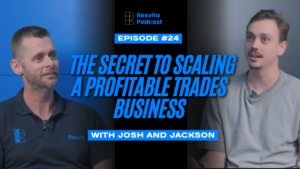
Want to learn more? Listen to the full episode, The Secret to Scaling a Profitable Trades Business, on the Handle It Podcast.
Frequently Asked Questions: Customer Experience for Trade Businesses
Why do tradies lose jobs even when they do good work?
Customers remember how you made them feel, not just the finished job. A small slip, like leaving rubbish behind, can outweigh good workmanship.
How can a trade business stop competing on price?
Compete on experience instead. When you do the little things others skip, customers have a reason to choose you, even if you’re not the cheapest.
What is a “wow moment” in a trade business?
It’s a small extra that customers notice and talk about. Examples include cleaning the driveway after a job or stacking materials neatly on site.
Why do referrals matter so much for tradies?
Referrals bring in customers who already trust you. They often come from the business that made the customer feel best, not just the one that did the best job.
What is a client journey?
A client journey is every step a customer goes through with your business. It runs from the first enquiry to the final invoice and any follow-up after the job.
How do I get my team to deliver a consistent customer experience?
Map your client journey and turn it into checklists in your job management software. Make sure tasks are only ticked off when done, and spot check them.
When should I follow up with a customer after a job?
A good time is 14 to 30 days after the job is paid. A call or site visit helps you fix small issues early and can lead to referrals.
What should I do after a customer pays a deposit?
Contact them within 24 hours. Thank them, explain what happens next and give them a direct contact so they’re not left wondering.
How does customer experience affect cash flow?
Customers who feel looked after are more likely to pay on time. They’re also more understanding when something goes wrong.
Where should I start if I want to improve customer experience?
Start by reviewing jobs that ended in complaints. Then talk about customer experience in your weekly team meetings and build from there.
Ready to build a trade business that grows with ease? Listen to more episodes of the Handle It Podcast and explore the RESVITA Training Centre for practical tools to help you scale.
Start building a business that works for you at RESVITA.