
Most trade business owners don’t have a work problem—they have a capacity problem.
As a business grows, so does the workload. Enquiries need responses, quotes require follow-ups, schedules need updating, and invoices must be processed. Meanwhile, customers continue to expect excellent communication and service.
This is where a virtual assistant team for trade businesses can make a significant impact. By providing administrative and operational support, virtual assistants help business owners reclaim valuable time, improve efficiency, and focus on business growth.
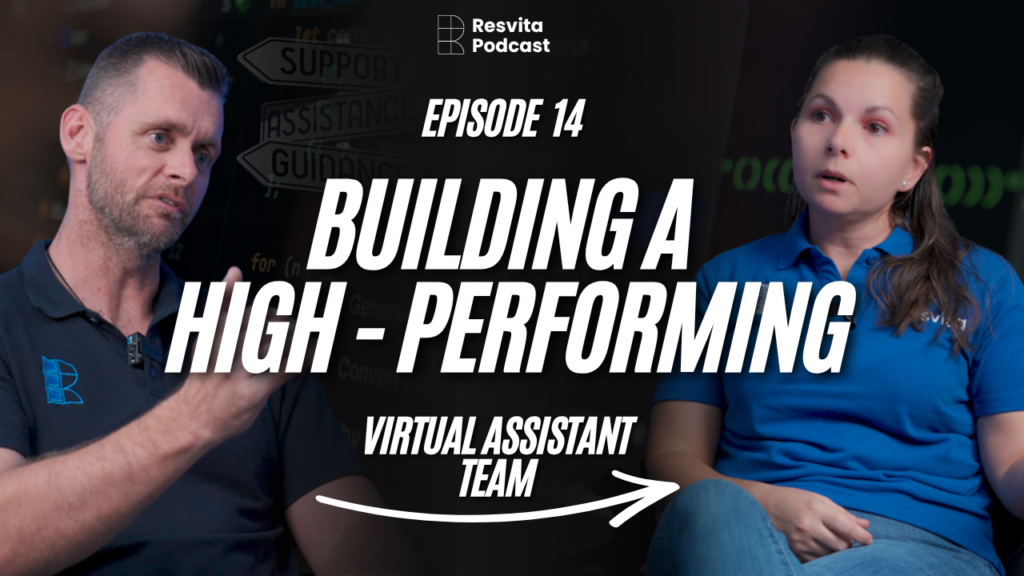
In this podcast episode, we explore how building a high-performing virtual assistant team can increase capacity, reduce operational bottlenecks, and create a more scalable business.
If you’d like to explore this topic in more detail, listen to the full podcast episode where we discuss why you’re busy but broke. Meanwhile, you can listen to more episodes here.. Listen to more episodes here
Why Trade Business Owners Hit a Capacity Ceiling
During the early stages of a business, handling everything yourself often feels normal.
You answer the phones, manage bookings, follow up on quotes, organise paperwork, and coordinate projects. Initially, this approach keeps costs down and provides greater control.
However, as the business grows, administrative responsibilities begin consuming more time. As a result, business owners often find themselves working longer hours while making less progress on strategic growth initiatives.
Before long, you’re spending more time managing daily operations than building the business itself.
Consequently, many trade business owners reach a growth ceiling. Operational demands continue increasing, but the number of available hours remains the same. Therefore, business growth begins to slow.
A virtual assistant team for trade businesses can help remove this bottleneck and create additional capacity.
The Hidden Cost of Administrative Work
One of the biggest insights discussed in the episode is that many trade business owners spend valuable time on tasks that don’t require their expertise.
For example, owners often handle:
- Managing inboxes
- Booking appointments
- Updating CRM systems
- Following up enquiries
- Data entry
- Administrative coordination
- Customer communication
- Calendar management
While these tasks are important, they do not necessarily require the business owner’s direct involvement.
As a result, high-value activities such as leadership, business development, strategic planning, and profit improvement are often pushed aside.
Over time, this creates operational bottlenecks and limits scalability.
Why Time Becomes the Biggest Bottleneck
Many business owners believe growth requires working harder.
However, sustainable growth rarely comes from working more hours. Instead, it comes from increasing capacity through systems, delegation, and support.
Every hour spent on low-value administration is an hour that cannot be invested in sales, leadership, team development, or strategic planning.
Therefore, creating support structures becomes essential for long-term success.
The Shift: From Doing Everything to Building Support Systems
A major theme throughout the episode is the importance of delegation through structure.
Many business owners assume hiring a virtual assistant simply means handing off tasks. However, successful delegation requires documented systems and clear processes.
Instead of asking:
“What can I do faster?”
The better question becomes:
“What can someone else do with the right process and training?”
This mindset shift creates freedom for business owners. Furthermore, it allows them to focus on leadership, growth, profitability, and long-term strategy.
Ultimately, businesses grow faster when owners spend more time working on the business rather than in it.
Discover business coaching, resources, podcasts, and tools created specifically for trade business owners looking to scale with confidence.
Building a Virtual Assistant Team That Delivers Results
Building a successful virtual assistant team for trade businesses requires more than simply hiring people.
Instead, it requires structure, communication, accountability, and clearly defined expectations.
The following elements are critical to success.
1. Clear Processes and Documentation
Virtual assistants perform best when expectations are clearly documented.
This includes:
- Standard operating procedures (SOPs)
- Process documentation
- Task checklists
- Workflow guides
- Communication protocols
As a result, work can be completed consistently and accurately regardless of who performs the task.
Furthermore, documented systems reduce training time and improve overall efficiency.
2. Strong Communication Systems
Communication is essential when managing remote team members.
Regular check-ins, clear expectations, and structured reporting systems help keep everyone aligned.
Additionally, communication tools create visibility and accountability across the organisation.
Consequently, tasks are completed faster and misunderstandings become less common.
3. Defined Roles and Responsibilities
Many virtual assistant teams struggle because responsibilities overlap or remain unclear.
Successful businesses clearly define:
- Ownership
- Responsibilities
- Expected outcomes
- Performance indicators
- Reporting structures
As a result, team members understand exactly what is expected of them.
Moreover, role clarity improves productivity and reduces confusion.
The Benefits of a Virtual Assistant Team for Trade Businesses
When implemented correctly, a virtual assistant team for trade businesses can deliver substantial benefits.
Increased Capacity
Firstly, business owners gain more time to focus on growth-related activities.
Rather than managing administrative tasks, they can concentrate on sales, leadership, business development, and profitability.
Improved Efficiency
Secondly, repetitive administrative tasks are handled more consistently.
As a result, workflows become smoother and operational efficiency improves.
Better Customer Experience
In addition, customer communication can be managed more effectively.
Enquiries receive faster responses, appointments are organised efficiently, and follow-ups occur consistently.
Consequently, customer satisfaction often increases.
Reduced Operational Bottlenecks
Most importantly, the business becomes less dependent on the owner.
When systems and support teams are in place, daily operations continue running smoothly even when the owner is focused elsewhere.
Therefore, the business becomes more scalable and resilient.
Signs Your Business Needs Virtual Assistant Support
Many trade business owners underestimate the amount of time spent on administration.
However, several warning signs often indicate the need for additional support.
These include:
- Constant inbox management
- Delayed quote follow-ups
- Missed administrative tasks
- Long working hours
- Limited time for strategic planning
- Slow customer responses
- Difficulty keeping systems updated
- Feeling overwhelmed by daily operations
If these challenges sound familiar, it may be time to explore building a virtual assistant team.
What Trade Business Owners Can Do Next
Building a virtual assistant team for trade businesses doesn’t require a complete business overhaul.
Instead, a structured approach often produces the best results.
Identify Repetitive Tasks
Begin by identifying activities that consume the most time.
Look for tasks that are repetitive, process-driven, and relatively easy to document.
Document Key Processes
Before delegating work, create clear systems and workflows.
This ensures consistency and simplifies training.
Start Small
Initially, outsource lower-risk administrative tasks.
For example, inbox management, appointment scheduling, and customer follow-ups are often excellent starting points.
Focus on Communication
Finally, establish regular reporting and accountability systems.
Consistent communication helps ensure tasks are completed correctly and objectives remain aligned.
Over time, these improvements create significant leverage throughout the business.
Final Thoughts
Many trade business owners assume growth requires working longer hours.
However, long-term business success is often achieved by increasing capacity rather than increasing effort.
A well-structured virtual assistant team for trade businesses provides the support needed to reduce administrative workload, improve efficiency, and create greater operational leverage.
As a result, business owners gain more time to focus on leadership, strategic growth, customer relationships, and profitability.
If this topic resonates with you, be sure to listen to the full podcast episode. It provides valuable insights into how trade business owners can build, manage, and optimise virtual assistant teams for sustainable growth.
After all, scalable businesses are not built by doing everything yourself.
Instead, they are built through effective systems, strong support structures, and teams that help the business perform at a higher level.
Ready to take action? Join one of our upcoming events and learn proven strategies to improve your systems, leadership, profitability, and business growth.
Frequently Asked Questions
What is a virtual assistant team for a trade business?
A virtual assistant team provides remote administrative and operational support to a trade business. As a result, business owners can focus more on leadership, growth, customer relationships, and profitability.
Why do trade businesses hire virtual assistants?
Trade businesses hire virtual assistants to manage administrative tasks such as scheduling, customer communication, quote follow-ups, reporting, and data management. Consequently, owners gain valuable time and capacity.
What tasks can a virtual assistant handle?
Virtual assistants commonly manage inboxes, appointment scheduling, customer service, invoicing support, reporting, CRM updates, and various administrative responsibilities.
How does a virtual assistant team support business growth?
By reducing administrative workload, a virtual assistant team creates more time for strategic planning, leadership, sales activities, and business development.
Why do virtual assistant teams sometimes fail?
Most failures occur because processes, expectations, and communication systems are unclear. Therefore, documentation and accountability are essential for success.
How can trade business owners successfully delegate to virtual assistants?
Successful delegation begins with documenting workflows, establishing clear expectations, providing training, and implementing accountability systems.
What are the signs a business needs virtual assistant support?
Common signs include excessive administrative work, missed follow-ups, slow customer responses, long working hours, and limited time for growth-focused activities.
How important are systems when managing virtual assistants?
Systems are critical because they create consistency, accountability, and operational clarity. As a result, virtual assistants can perform their roles more effectively.
Can virtual assistants improve customer experience?
Yes. Faster communication, organised scheduling, and consistent follow-up processes often lead to a significantly better customer experience.
What is the long-term benefit of building a high-performing virtual assistant team?
Over time, a virtual assistant team improves efficiency, increases business capacity, reduces operational bottlenecks, and helps create a more scalable and sustainable business.